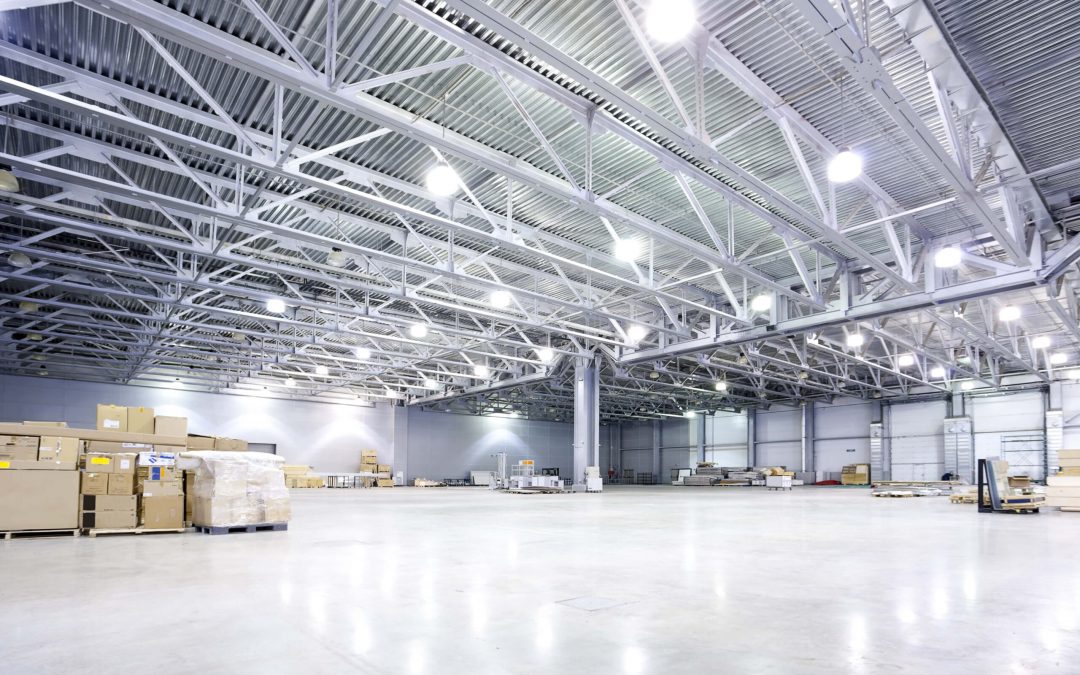
To choose the right LED high bay for a new warehouse or manufacturing facility, you must look beyond “lumen output” and “fixture reliability.” While brightness and durability are standard in 2026, the most critical factor for modern builds is integrated intelligence. Specifying high bays with integrated motion sensors allows for a 15–20% Capex investment that typically yields a 100% ROI within 6 months through 50%+ energy savings, all without the need for additional control wiring or complex central systems.
AdvanLED Sensor LED High Bays
Beyond the Commodity: Why “Smart” High Bays are the Highest ROI Spec
When planning a new warehouse, lighting is often treated as a late-stage commodity—a simple line item to be checked off. The prevailing logic among consultants and building owners is that because LED technology has matured, any reliable fixture will do.
However, treating lighting as a simple “on/off” utility is an expensive mistake that locks in high operating costs for years. By specifying Integrated Sensor High Bays during the design phase, you transition from a “standard” build to a high-efficiency asset with a negligible impact on initial Capex.
The Barrier: Debunking the “Complex Controls” Myth
The primary reason project managers shy away from smart lighting is the fear of complexity. Historically, “smart” meant centralized control hubs, specialized proprietary software, and miles of additional low-voltage data wiring.
The modern reality is different:
Zero Additional Rewiring: Integrated sensors live within the fixture itself. They utilize the existing power leads. No extra copper, no additional labor, and no specialized contractors are required.
Group Logic without Software: Modern fixtures allow for easy grouping (zoning) via simple remote or app-based commissioning. This means lights in the same aisle can act in unison without a master computer.
Capex Efficiency: Transitioning from a standard LED to a sensor-integrated smart LED typically only adds 15–20% to the lighting budget—a fraction of the total project cost that is often offset by energy rebates or tax incentives.
The Math: A 1-Year ROI Case Study
The true “Information Gain” lies in the occupancy data. In a typical 24/7 or double-shift operation, up to 70% of warehouse aisles are unoccupied at any given time. Traditional lights burn 100% power in 0% traffic.
Let’s look at the real-world savings of a single 200W LED High Bay using integrated sensors:
Variable
Standard LED High Bay
Smart Sensor High Bay
Power Rating
200W (Constant)
200W (Peak) / 20W (Dimmed)
Average Usage
100% Power
30% Active / 70% Dimmed
Effective Daily Load
2.4 kWh (12 hrs)
0.88 kWh (12 hrs)
Annual Operating Cost
RM 360.00
RM 132.00
Annual Savings
–
RM 228.00 per fixture
Note: Based on 12 hours/day, 300 days/year, at RM 0.50/kWh.
When you consider that the price difference for the sensor is often less than RM 100 per unit, the ROI is achieved in under 6 months. For a 100,000 sq. ft. facility, this translates to tens of thousands of Ringgit in annual OpEx reclaimed.
Strategic Benefits for Consultants and Owners
Specifying smart lighting isn’t just about electricity; it’s about future-proofing the asset.
Compliance & Green Ratings: Meeting increasingly strict energy codes (like GBI or LEED) becomes effortless when every light is an intelligent node.
Safety & Zoning: Instead of a pitch-black warehouse, sensors allow for “corridor logic”—dimming lights to a 10% safety level rather than turning them off, then instantly ramping to 100% when motion is detected.
Extended Lifespan: LEDs last longer when they aren’t running at 100% heat capacity around the clock. Dimming significantly reduces the thermal load on the driver and COB.
Conclusion: Spec-In for Success
The window to maximize ROI is during the planning phase. Once the “dumb” fixtures are ordered and the wiring is finalized, the cost to upgrade doubles.
Are you designing a new warehouse or manufacturing floor? Don’t settle for a commodity build. Let us help you review your floor plans to spec-in a lighting system that pays for itself before the first year of operation is over.
Choosing the Right LED High Bay Lights for Your Warehouse
Optimizing your warehouse lighting is more than just replacing bulbs — it’s about enhancing safety, improving efficiency, and maximizing productivity. This guide will help you choose the right LED high bay lighting for your warehouse.
Usual Problems with LED High Bay Lights
1. Inadequate Light Distribution
One common issue with high bay lighting is poor light distribution, especially if the beam angle is incorrect for the space. Using narrow beam lights in an open warehouse can lead to uneven illumination, creating dark spots. Similarly, wide beam lights in narrow aisles might cause light spill and waste.
2. Excessive Glare
Glare from LED high bay lights can be distracting, especially in large spaces where workers operate machinery or handle delicate tasks. This is often caused by improperly installed lights or lights with poor optical design. Glare not only affects worker comfort but can lead to fatigue and even safety hazards.
3. Short Lifespan Due to Overheating
LED lights are more energy-efficient and longer-lasting than traditional lighting, but if the fixtures are poorly designed or not properly ventilated, they can overheat. This leads to premature failure of the LEDs. Choosing lights with good thermal management and ensuring proper installation is crucial for longevity.
4. Inconsistent Light Output
Over time, the lumen output of high bay lights can degrade, especially if the LEDs are of lower quality. This inconsistency can result in varying levels of brightness across the warehouse. Ensuring you choose high-quality LED lights with proper lumen maintenance and warranty will help mitigate this issue.
5. Energy Inefficiency
While LED lights are known for their energy efficiency, some LED high bay lights still consume a significant amount of energy due to their design. This can happen if the light’s efficiency (measured in lumens per watt) isn’t up to standard. Opting for high-efficiency LED lights, like those with a higher lumen-per-watt rating, can significantly cut energy costs.
6. Poor Color Rendering
Color rendering index (CRI) is an important factor for visibility in warehouses, especially for tasks that require precision. Some low-cost LEDs have poor CRI, making the colors of objects in the warehouse appear distorted. Choose LED lights with a high CRI to ensure that the colors are rendered accurately and improve safety and accuracy in your warehouse.
Choosing the right High Bay light guidelines
1. Understand Ceiling Height & Space
15–20 ft: 10,000 – 15,000 lumens
20–30 ft: 20,000 – 30,000 lumens
30+ ft: 35,000+ lumens
Use wide beams for open spaces, and focused beams for aisles.
2. Beam Angle
120° wide beam: Best for open areas
60°–90° narrow beam: Ideal for shelves and aisles
3. UFO vs. Linear Type
UFO: Compact and easy to install
Linear: Great for rectangular layouts
4. Color Temperature
4000K: Soft neutral white
5000K: Bright and cool white
5700K+: Daylight tone
5. Smart Efficiency
Use dimming and motion sensors
Look for 130+ lm/W efficiency
6. Protection Ratings
IP65+: Water and dust resistance
IK08+: Strong impact resistance
7. Warranty & Certification
Choose UL, DLC, or CE certified lights with at least 5 years of warranty.
8. Smart Controls (Optional)
Features like remote scheduling, wireless control, and automation are useful for energy savings.
Struggling with Low Lighting Efficiency in Your Commercial or Industrial Spaces?
“Your lighting might be silently draining your profits.”
While you’re focused on operations, staffing, and logistics, your lighting system—often overlooked—is racking up costs, reducing productivity, and even compromising safety.
Lighting in commercial and industrial spaces isn’t just about brightness. It’s about efficiency, performance, ambiance, and long-term savings.
The Hidden Costs of Inefficient Lighting
Higher Energy Bills: Outdated bulbs waste electricity.
Constant Maintenance: Short lifespans mean more replacements.
Unsafe Working Conditions: Poor lighting increases hazards.
Environmental Impact: Inefficient systems leave a larger carbon footprint.
What Causes Low Lighting Efficiency?
Outdated Fixtures – Consuming too much power, delivering too little light.
Poor Layout Design – Uneven lighting creates dark zones and glare.
No Smart Controls – Wasted energy from lights staying on unnecessarily.
Lack of Maintenance – Dust and wear reduce output over time.
Incorrect Color Temperatures – Impacts comfort, productivity, and mood.
How to Boost Lighting Efficiency (and Profits)
Good news: you don’t need a full facility overhaul to improve lighting. Start with these smart upgrades:
Switch to LED Technology: Save up to 80% on energy and enjoy longer lifespans.
Add Smart Controls: Automate lighting based on motion, time, or daylight.
Optimize Layout: Ensure light reaches where it’s needed most.
Regular Maintenance: Clean and update fixtures to maintain brightness.
Use Task Lighting: Support focus areas while reducing general overhead usage.
Bonus: Sustainability Matters
Energy-efficient lighting helps your bottom line and the planet. Lower CO₂ emissions, better ESG scores, and a cleaner carbon footprint all come with smarter lighting systems.
Final Thoughts: Don’t Let Bad Lighting Dim Your Business
Lighting is a silent partner in your operations. By upgrading it, you’re unlocking savings, safety, and productivity all at once.
So—are your lights working for you, or against you?
Our Recommendation: Step Into the Future with LED Vision
Ready to upgrade? Here are two high-performance, energy-efficient lighting products from LED Vision that deliver both brilliance and reliability.
Qubit Down Light G7
High-efficiency LED with sleek, modern aesthetics
Excellent beam control and low-glare design
Ideal for office, retail, or hospitality environments
Brighten up professional spaces while cutting down on power use.
Wave Down Light G2
Built for industrial use with wide coverage
Smart heat dissipation ensures longer lifespan
Reduces eye fatigue and improves visual comfort
Perfect for warehouses, corridors, and manufacturing floors.
Need expert help choosing the right lighting for your space?