Nano Weatherproof Batten

Nano Weatherproof Batten

PRODUCTS / INDOOR LED LIGHTING / NANO WEATHERPROOF BATTEN

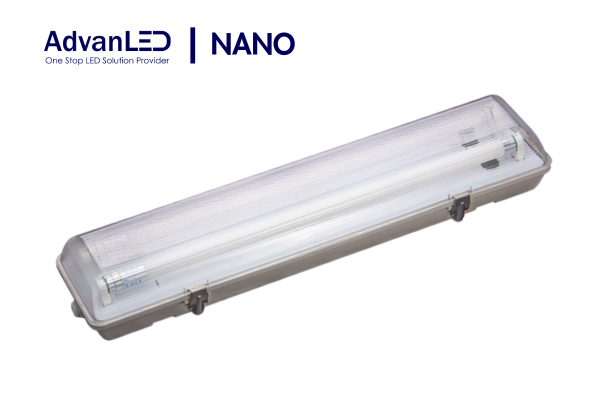
NANO WEATHERPROOF BATTEN

The AdvanLED Nano Weatherproof Batten is a high-performance LED lighting solution designed for durability and efficiency in demanding environments. With its IP65-rated sealed housing, robust construction, and wide light distribution, it is ideal for use in commercial, industrial, and outdoor settings such as factories, car parks, and retail spaces.

Features and benefits

  • Prismatic Diffuser
  • Enhanced Light Distribution
  • Durable and safe design
  • Completely sealed housing with gaskets to prevent moisture and dirt from entering the fixture.
  • Improves visual comfort by minimizing direct light exposure and harsh glare
Feature Nano Weatherproof Batten
IP Rating IP65
Housing Heavy gauge sheet steel body
Housing Cover Wire mesh cover
Surface Finishing White epoxy powder & oven baked
Lamp Holder Polycarbonate housing with copper place contact
Connector UL, VDE safety approved material
Product Code Product Description Thickness (mm)
LNWP04FT0000000000001T0000 Nano Weatherproof Batten 4FT 1T 0.3mm
LNWP04FT0000000000002T0000 Nano Weatherproof Batten 4FT 2T 0.3mm

SURFACE MOUNTED LED HIGH BAY

SURFACE MOUNTED LED HIGH BAY

PRODUCTS / INDOOR LED LIGHTING / SURFACE MOUNTED LED HIGH BAY

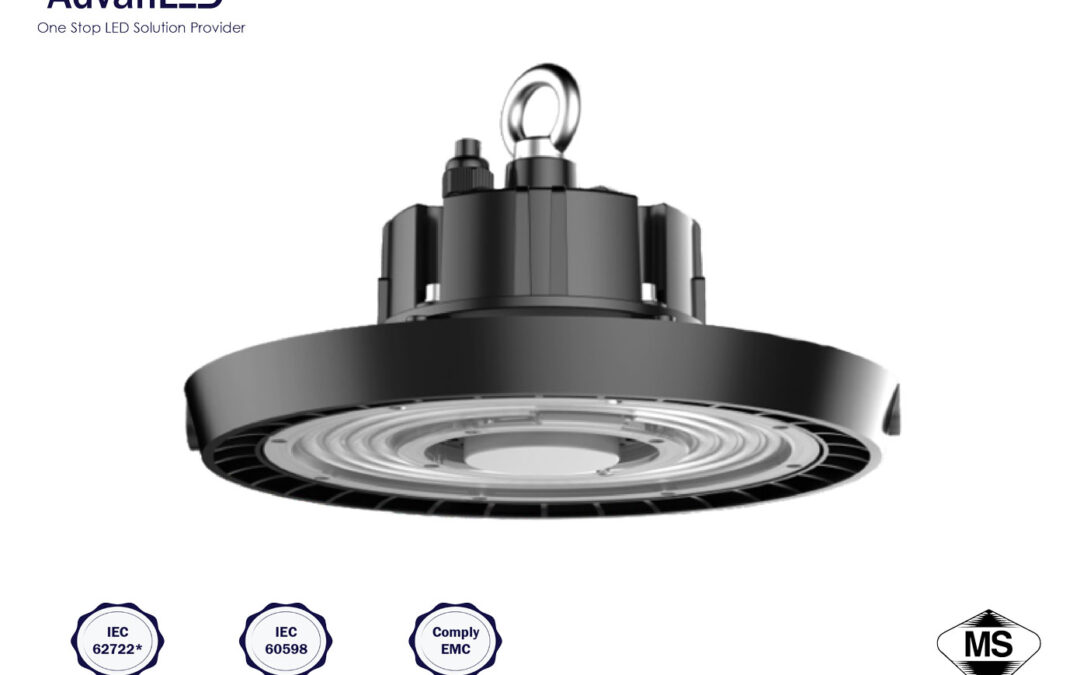
SURFACE MOUNTED LED HIGH BAY


The energy-efficient LED high bay is the perfect choice for superior illumination. With a lifetime of 50,000 hours, this surface mounted LED high bay guarantees long-lasting performance. Not only is it cost-effective, but it also ensures maximum brightness while minimizing energy consumption.

Whether for warehouses, workshops, or industrial spaces, the energy-efficient LED high bay provides a reliable and sustainable lighting solution. Invest in this innovative technology and reap the benefits of long-lasting, energy-efficient illumination with the LED high bay.

Power (W) 80 / 100
Lumen (lm) 10400 / 13000
Efficiancy (lm/W) 130
Colour Temperature, CCT (K) 6500K
Colour Rendering Index (CRI) ≥ 80
Beam Angle (°) 80°
Dimmable No
Input Voltage(VAC) 220 – 250
Power Factor (PF) ≥ 0.9
THD (%) ≤ 20
IP Rating IP65
IK Rating IK10
Materials Die cast aluminium & PC / Plate (Mild Steel)
Driver External LED Driver
Life Time (hours) 50,000
Finishing Color Black
Operating Temp. (°C) -20°C ~ 50°C
Working Humidity (% RH) 10 ~ 90
Storage Temp. (°C) 10°C – 65°C

Indoor or interior lighting

Indoor lighting for a building is the light source that is being integrated into the inner of the building for some general purpose such as brighten the room and give some special or desired effect to the room. The lighting in a home will changes the mood of person in the room just as it does the perceived size of a room. The lighting in a room either provides illumination for the entirety of the room, it highlights very specific elements. Fixture, placement and type of lighting are all the important aspects of indoor design, and they work in conjunction with color selections, size, availability of natural light and furniture selection. The elements that come together when the right lighting is achieved and this can transform a room into a seamless combination of functionality and style.

How indoor lighting affect us

There is a lots of research says that the effect of indoor light has on our emotional system. This is because the light will being perceived as heat, and the perception of heat can trigger our emotions. Beside that, indoor lighting regulates a lot of human behaviors and activities such as sleep and attentiveness. Research have state that students who study in environments with the natural day lighting can increase in their academic performance. Natural light is always preferred but not always attainable in a classroom or work environment. So, indoor light have affect us in our daily light, we need to be more careful when dealing with the purchasing and installation of indoor light.

SURFACE MOUNTED LED HIGH BAY

A light fixture (US English), light fitting (UK English), or luminaire is an electrical device that contains an electric lamp that provides illumination. All light fixtures have a fixture body and one or more lamps. The lamps may be in sockets for easy replacement—or, in the case of some LED fixtures, hard-wired in place.

Fixtures may also have a switch to control the light, either attached to the lamp body or attached to the power cable. Permanent light fixtures, such as dining room chandeliers, may have no switch on the fixture itself, but rely on a wall switch.

Fixtures require an electrical connection to a power source, typically AC mains power, but some run on battery power for camping or emergency lights. Permanent lighting fixtures are directly wired. Movable lamps have a plug and cord that plugs into a wall socket.

Light fixtures may also have other features, such as reflectors for directing the light, an aperture (with or without a lens), an outer shell or housing for lamp alignment and protection, an electrical ballast or power supply, and a shade to diffuse the light or direct it towards a workspace (e.g., a desk lamp). A wide variety of special light fixtures are created for use in the automotive lighting industry, aerospace, marine and medicine sectors.

Portable light fixtures are often called lamps, as in table lamp or desk lamp. In technical terminology, the lamp is the light source, which, in casual terminology, is called the light bulb. The International Electrotechnical Commission (IEC) recommends the term luminaire for technical use.

Indoor Lighting Technology Trend In Fourth Industry Revolution

1) Connectivity–With LEDs comprehensively in the mainstream, the next frontier in lighting is controls. Call it smart, call it connected, call it what you like – the point is that your lights can be controlled. Controller and sensors have been around for donkey’s years, but the challenge now is to make them more sophisticated, get them to communicate with other devices and make sure people use them to perform more and more task.

2) The internet of things (IoT)-There are only computer , smart-phone and other smart device can be connected to web. With the internet of things(IoT) technology,  it’s no longer just computers and smart-phones that are connected to the web, but also your clothes, your coffee cup, your heart monitor and your LED lights. Lighting is an ideal network for internet-of-things services to be built on – because it’s already there in the ceiling of every building, looking down at us, wired up and ready to go. You only have to add a few sensors or controller so that it can make some data connection with other user.

3) Built-in light sources–Because LED light sources have good quality, so it don’t have to be replaced very often, and because no standards have emerged for what they should be like, manufacturers have got used to building them into fittings, rather than designing new luminaires around replaceable ‘lamps’. But what happens if they fail early? Or a better, more efficient module comes on the market? Organisations such as Zhaga have sought to address the issue by coming up with agreed designs, but integrated modules are becoming the norm. Will we regret lumbering our clients with light sources they can’t change?

LED HIGH BAY AP SERIES

LED HIGH BAY AP SERIES

PRODUCTS / INDOOR LED LIGHTING / LED HIGH BAY AP SERIES

LED HIGH BAY AP SERIES


Our latest LED High Bay AP series is a cost-effective high bay light that combines high performance with a 130lm/w super high lumen output. The LED High Bay AP series ensures more than 50,000 hours of use. When installed in a warehouse and used for 8 hours a day, this LED High Bay can last nearly 20 years. This series also boasts an IP66 rating, providing protection against dust and strong jets of water from all directions. With its future-proof design, this LED High Bay will certainly meet your lighting needs.


Applications:
  • Warehouses
  • Factories
  • High Ceilings Areas
  • Ship Yard
  • Sports Complex
Part No. AVL-RKHBL200W-02-G9
Power (W) 200
Lumen (lm) 26000
Efficiency (lm/W) 130
Colour Temperature, CCT (K) 5000K
Colour Rendering Index (CRI) ≥ 80
Beam Angle (°) 120°
Dimmable No
Input Voltage(VAC) 220 – 250
Power Factor (PF) ≥ 0.9
THD (%) ≤ 20
IP Rating IP 65
IK Rating IK 10
Materials Aluminium & PC
Driver External Round LED Driver
Life Time (hours) 50,000
Finishing Color Black
Operating Temp. (°C) -20°C ~ 50°C
Working Humidity (% RH) 10 ~ 90
Storage Temp. (°C) 10°C – 65°C

Indoor or interior lighting

Indoor lighting for a building is the light source that is being integrated into the inner of the building for some general purpose such as brighten the room and give some special or desired effect to the room. The lighting in a home will changes the mood of person in the room just as it does the perceived size of a room. The lighting in a room either provides illumination for the entirety of the room, it highlights very specific elements. Fixture, placement and type of lighting are all the important aspects of indoor design, and they work in conjunction with color selections, size, availability of natural light and furniture selection. The elements that come together when the right lighting is achieved and this can transform a room into a seamless combination of functionality and style.

How indoor lighting affect us

There is a lots of research says that the effect of indoor light has on our emotional system. This is because the light will being perceived as heat, and the perception of heat can trigger our emotions. Beside that, indoor lighting regulates a lot of human behaviors and activities such as sleep and attentiveness. Research have state that students who study in environments with the natural day lighting can increase in their academic performance. Natural light is always preferred but not always attainable in a classroom or work environment. So, indoor light have affect us in our daily light, we need to be more careful when dealing with the purchasing and installation of indoor light.

LED HIGH BAY AP SERIES

A light fixture (US English), light fitting (UK English), or luminaire is an electrical device that contains an electric lamp that provides illumination. All light fixtures have a fixture body and one or more lamps. The lamps may be in sockets for easy replacement—or, in the case of some LED fixtures, hard-wired in place.

Fixtures may also have a switch to control the light, either attached to the lamp body or attached to the power cable. Permanent light fixtures, such as dining room chandeliers, may have no switch on the fixture itself, but rely on a wall switch.

Fixtures require an electrical connection to a power source, typically AC mains power, but some run on battery power for camping or emergency lights. Permanent lighting fixtures are directly wired. Movable lamps have a plug and cord that plugs into a wall socket.

Light fixtures may also have other features, such as reflectors for directing the light, an aperture (with or without a lens), an outer shell or housing for lamp alignment and protection, an electrical ballast or power supply, and a shade to diffuse the light or direct it towards a workspace (e.g., a desk lamp). A wide variety of special light fixtures are created for use in the automotive lighting industry, aerospace, marine and medicine sectors.

Portable light fixtures are often called lamps, as in table lamp or desk lamp. In technical terminology, the lamp is the light source, which, in casual terminology, is called the light bulb. The International Electrotechnical Commission (IEC) recommends the term luminaire for technical use.

Indoor Lighting Technology Trend In Fourth Industry Revolution

1) Connectivity–With LEDs comprehensively in the mainstream, the next frontier in lighting is controls. Call it smart, call it connected, call it what you like – the point is that your lights can be controlled. Controller and sensors have been around for donkey’s years, but the challenge now is to make them more sophisticated, get them to communicate with other devices and make sure people use them to perform more and more task.

2) The internet of things (IoT)-There are only computer , smart-phone and other smart device can be connected to web. With the internet of things(IoT) technology,  it’s no longer just computers and smart-phones that are connected to the web, but also your clothes, your coffee cup, your heart monitor and your LED lights. Lighting is an ideal network for internet-of-things services to be built on – because it’s already there in the ceiling of every building, looking down at us, wired up and ready to go. You only have to add a few sensors or controller so that it can make some data connection with other user.

3) Built-in light sources–Because LED light sources have good quality, so it don’t have to be replaced very often, and because no standards have emerged for what they should be like, manufacturers have got used to building them into fittings, rather than designing new luminaires around replaceable ‘lamps’. But what happens if they fail early? Or a better, more efficient module comes on the market? Organisations such as Zhaga have sought to address the issue by coming up with agreed designs, but integrated modules are becoming the norm. Will we regret lumbering our clients with light sources they can’t change?