No Results Found
The page you requested could not be found. Try refining your search, or use the navigation above to locate the post.
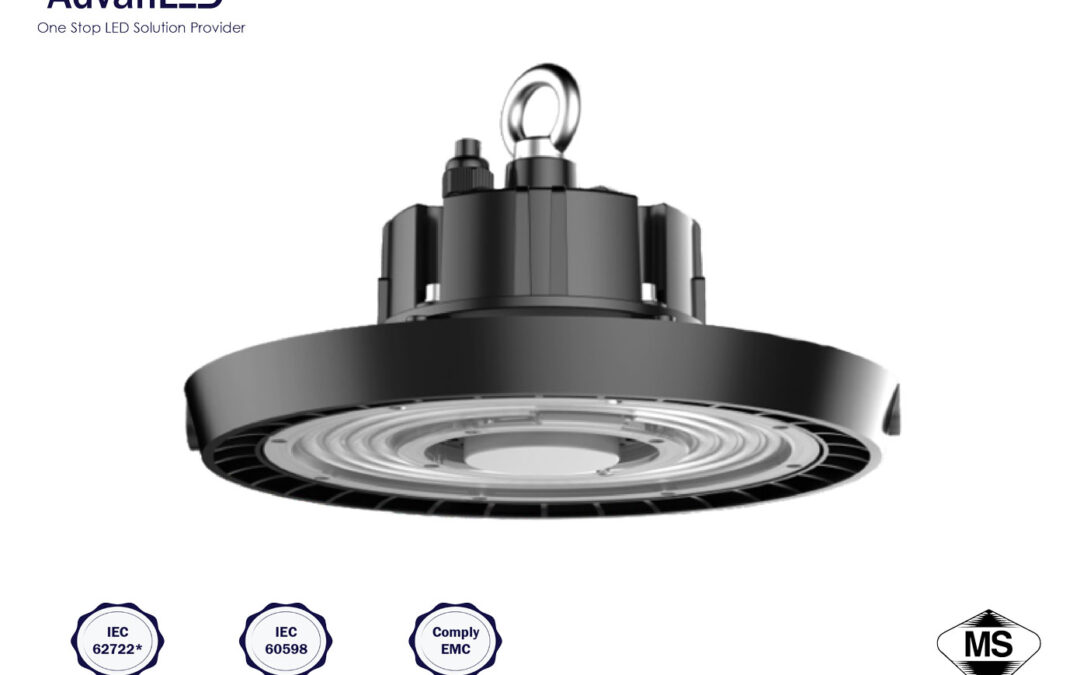
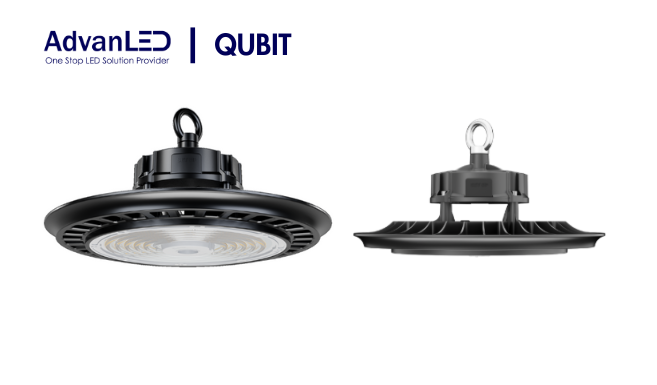
Designed for demanding indoor applications, the Qubit High Bay G7 offers high lumen output, excellent energy efficiency, and reliable operation. Its durable construction and superior thermal management ensure consistent performance even in challenging environments.
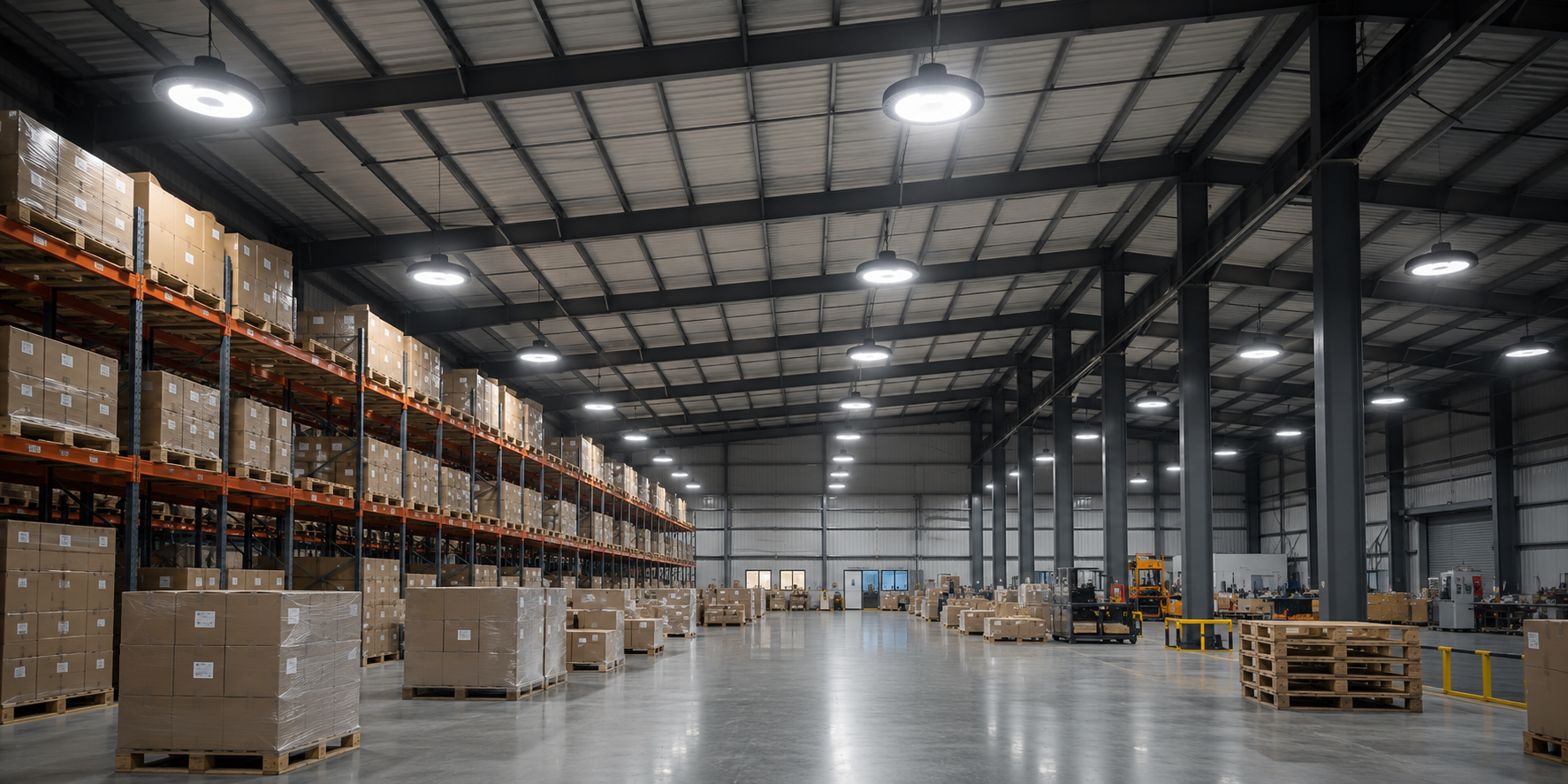
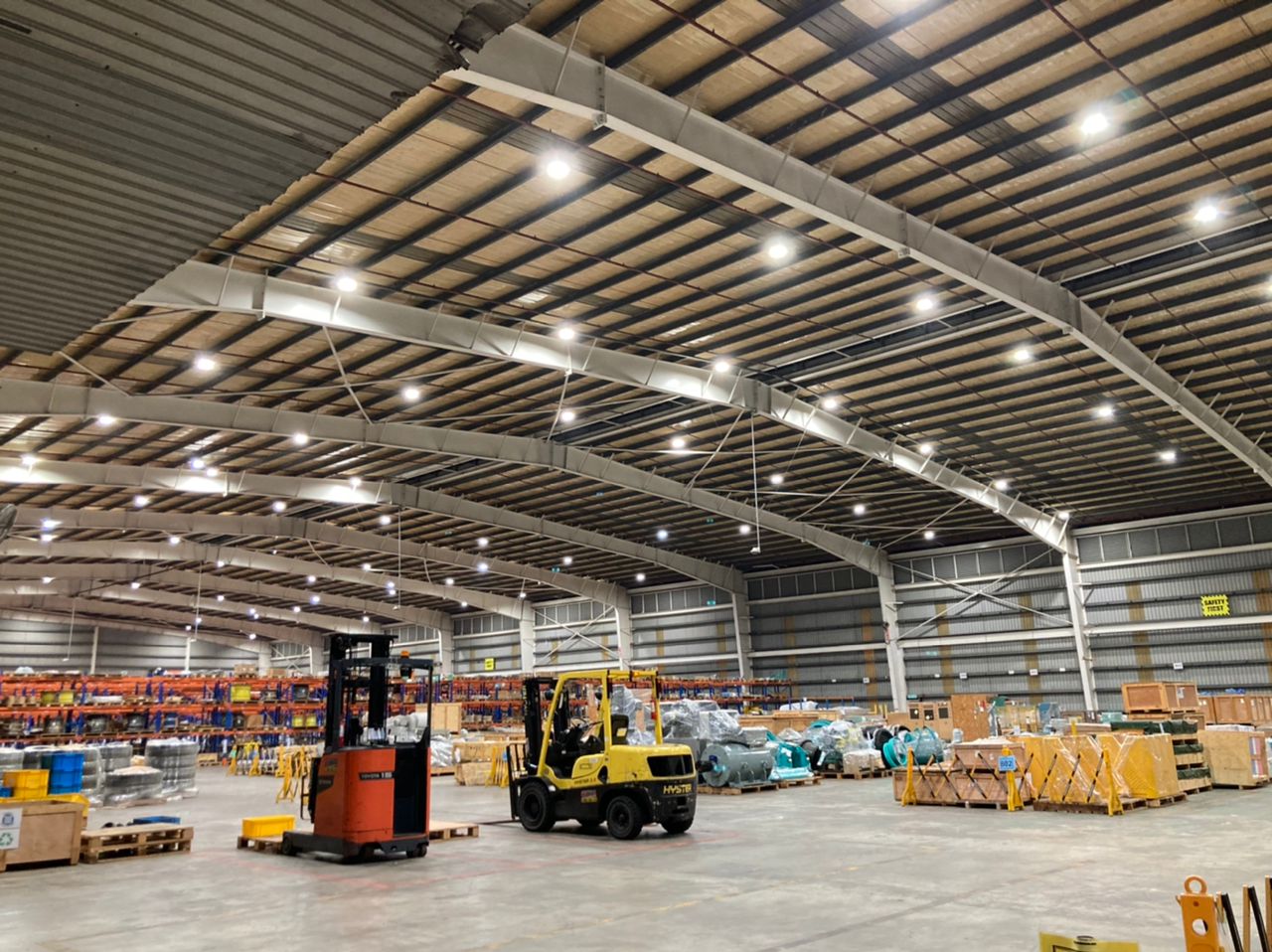
Whether for warehouses, factories, logistics centres, or large commercial spaces, the Qubit High Bay G8 delivers dependable lighting that enhances visibility, safety, and productivity.
A Power Selectable Switch lets you choose between different wattage levels (e.g., 60W, 80W, 100W) in one fixture using a simple built-in switch—no need for multiple models.
An Optional Motion Sensor is an add-on feature that detects movement and automatically turns the light on or off. When motion is detected, the light activates, and after a set time with no movement, it turns off to save energy.
The Qubit High Bay G7 features a selectable beam angle of 60°, 90°, or 105°, allowing you to focus light for high ceilings, balance brightness for general areas, or spread it wide for large open spaces—all with a simple lens adjustment.
The Qubit High Bay Accessories PIR Sensor G7 uses infrared technology to detect movement from people or objects, enabling automatic lighting control for enhanced convenience and energy efficiency.
The Qubit High Bay Accessories Safety Chain 1m G7 provides an added layer of security by supporting the fixture and preventing it from falling in case of mounting failure.
The Qubit High Bay Accessories Surface Mount Bracket G7 allows you to securely mount the high bay light directly onto flat surfaces like ceilings or beams, making installation quick and stable.
The Qubit High Bay Accessories Metal Reflector 100W/150W G7 helps direct and focus the light output, reducing glare and enhancing brightness control for 100W and 150W fixtures.
The Qubit High Bay Accessories Metal Reflector 200W G7 is designed to focus and control light distribution for 200W fixtures, improving illumination efficiency and minimizing light spill.
| Feature | Qubit High Bay G7 |
|---|---|
| Power Consumption | 60W/80W/100W | 90W/120W/150W | 110W/150W/200W |
| Luminous Efficacy | 150 lm/W |
| Colour Rendering Index (CRI) | 80 |
| Input Voltage | 220-250 |
| Power Factor (PF) | 50/60Hz |
| Input Voltage | ≥ 0.9 |
| Beam Angle | 60°, 90°, 105° (Adjustable) |
| Dimmable | No (optional) |
| Surge Protection | 4KV/6KV |
| Motion Sensor | No (optional) |
| THD (%) | ≤ 20 |
| IK Rating | Ik08 |
| IP Rating | IP65 |
| Product Code | Product Description | Power (W) | Luminance (lm) | CCT |
|---|---|---|---|---|
| LQHBD240100S840G790SLS0000 | Qubit High Bay D240 100S 840 90S Switch Power G7 | 60/80/100 | 9,000 / 11,600 / 14,000 | 4000K |
| LQHBD240100S865G790SLS0000 | Qubit High Bay D240 100S 865 90S Switch Power G7 | 60/80/100 | 9,000 / 11,600 / 14,000 | 6500K |
| LQHBD240100S8SCG790SLS0000 | Qubit High Bay D240 100S 8SC 90S Switch Power G7 | 60/80/100 | 9,000 / 11,600 / 14,000 | CCT Selectable |
| LQHBD300150S840G790SLS0000 | Qubit High Bay D300 150S 840 90S Switch Power G7 | 90/120/150 | 13,500 / 17,400 / 21,000 | 4000K |
| LQHBD300150S865G790SLS0000 | Qubit High Bay D300 150S 865 90S Switch Power G7 | 90/120/150 | 13,500 / 17,400 / 21,000 | 6500K |
| LQHBD300150S8SCG790SLS0000 | Qubit High Bay D300 150S 8SC 90S Switch Power G7 | 90/120/150 | 13,500 / 17,400 / 21,000 | CCT Selectable |
| LQHBD300200S840G790SLS0000 | Qubit High Bay D300 200S 840 90S Switch Power G7 | 110/150/200 | 16,500 / 21,750 / 28,000 | 4000K |
| LQHBD300200S865G790SLS0000 | Qubit High Bay D300 200S 865 90S Switch Power G7 | 110/150/200 | 16,500 / 21,750 / 28,000 | 6500K |
| LQHBD300200S8SCG790SLS0000 | Qubit High Bay D300 200S 8SC 90S Switch Power G7 | 110/150/200 | 16,500 / 21,750 / 28,000 | CCT Selectable |
| Feature | Qubit High Bay G7 |
|---|---|
| Materials | Die cast aluminium & PC lens |
| Driver | External LED Driver |
| Life Time (hours) | 50,000 |
| Finishing Color | Powder Black |
| Operating Temp (°C) | -20°C – 50°C |
| Working Humidity (%RH) | 10-90 |
| Storage Temp (°C) | 10°C-65°C |
| Product Code | Product Description |
|---|---|
| LQHBACC0SMBK000G7000000000 | Qubit High Bay Accessories Surface Mount Bracket G7 |
| LQHBACC0R1DW000G7000000000 | Qubit High Bay Accessories Metal Reflector 100W/150W G7 |
| LQHBACC0R2DW000G7000000000 | Qubit High Bay Accessories Metal Reflector 200W G7 |
| LQHBACC0MMSE000G7000000000 | Qubit High Bay Accessories Microwave Sensor G7 |
| LQHBACC0PMSE000G7000000000 | Qubit High Bay Accessories PIR Sensor G7 |
| LQHBACC0SC10000G7000000000 | Qubit High Bay Accessories Safety Chain 1m G7 |
The page you requested could not be found. Try refining your search, or use the navigation above to locate the post.
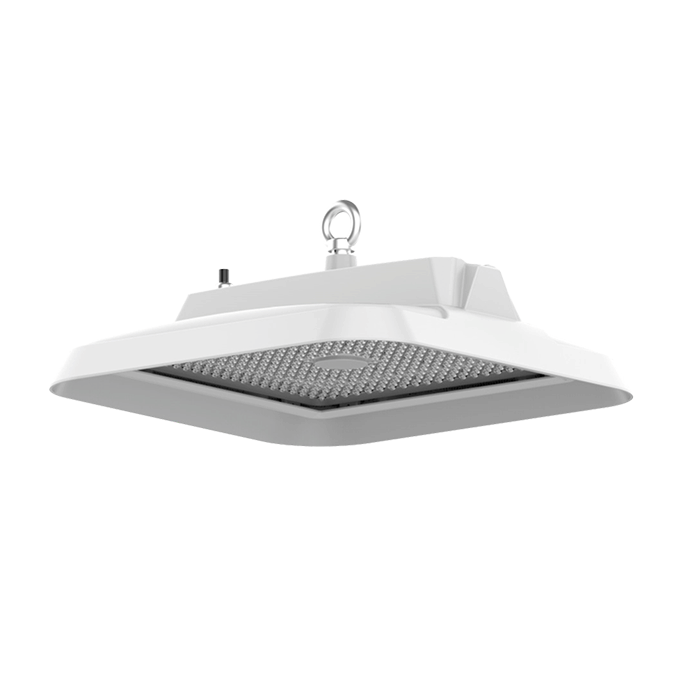
PRODUCTS / INDOOR LED LIGHTING / SURFACE MOUNTED LED HIGH BAY
| Power (W) | 80 / 100 |
| Lumen (lm) | 10400 / 13000 |
| Efficiancy (lm/W) | 130 |
| Colour Temperature, CCT (K) | 6500K |
| Colour Rendering Index (CRI) | ≥ 80 |
| Beam Angle (°) | 80° |
| Dimmable | No |
| Input Voltage(VAC) | 220 – 250 |
| Power Factor (PF) | ≥ 0.9 |
| THD (%) | ≤ 20 |
| IP Rating | IP65 |
| IK Rating | IK10 |
| Materials | Die cast aluminium & PC / Plate (Mild Steel) |
| Driver | External LED Driver |
| Life Time (hours) | 50,000 |
| Finishing Color | Black |
| Operating Temp. (°C) | -20°C ~ 50°C |
| Working Humidity (% RH) | 10 ~ 90 |
| Storage Temp. (°C) | 10°C – 65°C |


Indoor or interior lighting
Indoor lighting for a building is the light source that is being integrated into the inner of the building for some general purpose such as brighten the room and give some special or desired effect to the room. The lighting in a home will changes the mood of person in the room just as it does the perceived size of a room. The lighting in a room either provides illumination for the entirety of the room, it highlights very specific elements. Fixture, placement and type of lighting are all the important aspects of indoor design, and they work in conjunction with color selections, size, availability of natural light and furniture selection. The elements that come together when the right lighting is achieved and this can transform a room into a seamless combination of functionality and style.
How indoor lighting affect us
There is a lots of research says that the effect of indoor light has on our emotional system. This is because the light will being perceived as heat, and the perception of heat can trigger our emotions. Beside that, indoor lighting regulates a lot of human behaviors and activities such as sleep and attentiveness. Research have state that students who study in environments with the natural day lighting can increase in their academic performance. Natural light is always preferred but not always attainable in a classroom or work environment. So, indoor light have affect us in our daily light, we need to be more careful when dealing with the purchasing and installation of indoor light.
SURFACE MOUNTED LED HIGH BAY
A light fixture (US English), light fitting (UK English), or luminaire is an electrical device that contains an electric lamp that provides illumination. All light fixtures have a fixture body and one or more lamps. The lamps may be in sockets for easy replacement—or, in the case of some LED fixtures, hard-wired in place.
Fixtures may also have a switch to control the light, either attached to the lamp body or attached to the power cable. Permanent light fixtures, such as dining room chandeliers, may have no switch on the fixture itself, but rely on a wall switch.
Fixtures require an electrical connection to a power source, typically AC mains power, but some run on battery power for camping or emergency lights. Permanent lighting fixtures are directly wired. Movable lamps have a plug and cord that plugs into a wall socket.
Light fixtures may also have other features, such as reflectors for directing the light, an aperture (with or without a lens), an outer shell or housing for lamp alignment and protection, an electrical ballast or power supply, and a shade to diffuse the light or direct it towards a workspace (e.g., a desk lamp). A wide variety of special light fixtures are created for use in the automotive lighting industry, aerospace, marine and medicine sectors.
Portable light fixtures are often called lamps, as in table lamp or desk lamp. In technical terminology, the lamp is the light source, which, in casual terminology, is called the light bulb. The International Electrotechnical Commission (IEC) recommends the term luminaire for technical use.
Indoor Lighting Technology Trend In Fourth Industry Revolution
1) Connectivity–With LEDs comprehensively in the mainstream, the next frontier in lighting is controls. Call it smart, call it connected, call it what you like – the point is that your lights can be controlled. Controller and sensors have been around for donkey’s years, but the challenge now is to make them more sophisticated, get them to communicate with other devices and make sure people use them to perform more and more task.
2) The internet of things (IoT)-There are only computer , smart-phone and other smart device can be connected to web. With the internet of things(IoT) technology, it’s no longer just computers and smart-phones that are connected to the web, but also your clothes, your coffee cup, your heart monitor and your LED lights. Lighting is an ideal network for internet-of-things services to be built on – because it’s already there in the ceiling of every building, looking down at us, wired up and ready to go. You only have to add a few sensors or controller so that it can make some data connection with other user.
3) Built-in light sources–Because LED light sources have good quality, so it don’t have to be replaced very often, and because no standards have emerged for what they should be like, manufacturers have got used to building them into fittings, rather than designing new luminaires around replaceable ‘lamps’. But what happens if they fail early? Or a better, more efficient module comes on the market? Organisations such as Zhaga have sought to address the issue by coming up with agreed designs, but integrated modules are becoming the norm. Will we regret lumbering our clients with light sources they can’t change?


PRODUCTS / INDOOR LED LIGHTING / LED HIGH BAY LIGHT FITTING
| Part No. | AVL-SQHB-100S-XXD-57K |
| Power (W) | 100 |
| Lumen (lm) | 14000 |
| Efficiancy (lm/W) | 140 |
| Colour Temperature, CCT (K) | 5700K |
| Colour Rendering Index (CRI) | ≥80 |
| Beam Angle (°) | 30°, 60°, 90°, 150° |
| Dimmable | No |
| Input Voltage(VAC) | 220 – 250 |
| Power Factor (PF) | ≥ 0.9 |
| THD (%) | ≤ 20 |
| IP Rating | IP65 |
| Materials | Aluminium & PC |
| Driver | External Round LED Driver |
| Life Time (hours) | 50,000 |
| Finishing Color | Black |
| Operating Temp. (°C) | -20°C ~ 50°C |
| Working Humidity (% RH) | 10 ~ 90 |
| Storage Temp. (°C) | 10°C – 65°C |


Indoor or interior lighting
Indoor lighting for a building is the light source that is being integrated into the inner of the building for some general purpose such as brighten the room and give some special or desired effect to the room. The lighting in a home will changes the mood of person in the room just as it does the perceived size of a room. The lighting in a room either provides illumination for the entirety of the room, it highlights very specific elements. Fixture, placement and type of lighting are all the important aspects of indoor design, and they work in conjunction with color selections, size, availability of natural light and furniture selection. The elements that come together when the right lighting is achieved and this can transform a room into a seamless combination of functionality and style.
How indoor lighting affect us
There is a lots of research says that the effect of indoor light has on our emotional system. This is because the light will being perceived as heat, and the perception of heat can trigger our emotions. Beside that, indoor lighting regulates a lot of human behaviors and activities such as sleep and attentiveness. Research have state that students who study in environments with the natural day lighting can increase in their academic performance. Natural light is always preferred but not always attainable in a classroom or work environment. So, indoor light have affect us in our daily light, we need to be more careful when dealing with the purchasing and installation of indoor light.
LED HI BAY LIGHT G3
A light fixture (US English), light fitting (UK English), or luminaire is an electrical device that contains an electric lamp that provides illumination. All light fixtures have a fixture body and one or more lamps. The lamps may be in sockets for easy replacement—or, in the case of some LED fixtures, hard-wired in place.
Fixtures may also have a switch to control the light, either attached to the lamp body or attached to the power cable. Permanent light fixtures, such as dining room chandeliers, may have no switch on the fixture itself, but rely on a wall switch.
Fixtures require an electrical connection to a power source, typically AC mains power, but some run on battery power for camping or emergency lights. Permanent lighting fixtures are directly wired. Movable lamps have a plug and cord that plugs into a wall socket.
Light fixtures may also have other features, such as reflectors for directing the light, an aperture (with or without a lens), an outer shell or housing for lamp alignment and protection, an electrical ballast or power supply, and a shade to diffuse the light or direct it towards a workspace (e.g., a desk lamp). A wide variety of special light fixtures are created for use in the automotive lighting industry, aerospace, marine and medicine sectors.
Portable light fixtures are often called lamps, as in table lamp or desk lamp. In technical terminology, the lamp is the light source, which, in casual terminology, is called the light bulb. The International Electrotechnical Commission (IEC) recommends the term luminaire for technical use.
Indoor Lighting Technology Trend In Fourth Industry Revolution
1) Connectivity–With LEDs comprehensively in the mainstream, the next frontier in lighting is controls. Call it smart, call it connected, call it what you like – the point is that your lights can be controlled. Controller and sensors have been around for donkey’s years, but the challenge now is to make them more sophisticated, get them to communicate with other devices and make sure people use them to perform more and more task.
2) The internet of things (IoT)-There are only computer , smart-phone and other smart device can be connected to web. With the internet of things(IoT) technology, it’s no longer just computers and smart-phones that are connected to the web, but also your clothes, your coffee cup, your heart monitor and your LED lights. Lighting is an ideal network for internet-of-things services to be built on – because it’s already there in the ceiling of every building, looking down at us, wired up and ready to go. You only have to add a few sensors or controller so that it can make some data connection with other user.
3) Built-in light sources–Because LED light sources have good quality, so it don’t have to be replaced very often, and because no standards have emerged for what they should be like, manufacturers have got used to building them into fittings, rather than designing new luminaires around replaceable ‘lamps’. But what happens if they fail early? Or a better, more efficient module comes on the market? Organisations such as Zhaga have sought to address the issue by coming up with agreed designs, but integrated modules are becoming the norm. Will we regret lumbering our clients with light sources they can’t change?


PRODUCTS / INDOOR LED LIGHTING / LED HIGH BAY AP SERIES
| Part No. | AVL-RKHBL200W-02-G9 |
| Power (W) | 200 |
| Lumen (lm) | 26000 |
| Efficiency (lm/W) | 130 |
| Colour Temperature, CCT (K) | 5000K |
| Colour Rendering Index (CRI) | ≥ 80 |
| Beam Angle (°) | 120° |
| Dimmable | No |
| Input Voltage(VAC) | 220 – 250 |
| Power Factor (PF) | ≥ 0.9 |
| THD (%) | ≤ 20 |
| IP Rating | IP 65 |
| IK Rating | IK 10 |
| Materials | Aluminium & PC |
| Driver | External Round LED Driver |
| Life Time (hours) | 50,000 |
| Finishing Color | Black |
| Operating Temp. (°C) | -20°C ~ 50°C |
| Working Humidity (% RH) | 10 ~ 90 |
| Storage Temp. (°C) | 10°C – 65°C |


Indoor or interior lighting
Indoor lighting for a building is the light source that is being integrated into the inner of the building for some general purpose such as brighten the room and give some special or desired effect to the room. The lighting in a home will changes the mood of person in the room just as it does the perceived size of a room. The lighting in a room either provides illumination for the entirety of the room, it highlights very specific elements. Fixture, placement and type of lighting are all the important aspects of indoor design, and they work in conjunction with color selections, size, availability of natural light and furniture selection. The elements that come together when the right lighting is achieved and this can transform a room into a seamless combination of functionality and style.
How indoor lighting affect us
There is a lots of research says that the effect of indoor light has on our emotional system. This is because the light will being perceived as heat, and the perception of heat can trigger our emotions. Beside that, indoor lighting regulates a lot of human behaviors and activities such as sleep and attentiveness. Research have state that students who study in environments with the natural day lighting can increase in their academic performance. Natural light is always preferred but not always attainable in a classroom or work environment. So, indoor light have affect us in our daily light, we need to be more careful when dealing with the purchasing and installation of indoor light.
LED HIGH BAY AP SERIES
A light fixture (US English), light fitting (UK English), or luminaire is an electrical device that contains an electric lamp that provides illumination. All light fixtures have a fixture body and one or more lamps. The lamps may be in sockets for easy replacement—or, in the case of some LED fixtures, hard-wired in place.
Fixtures may also have a switch to control the light, either attached to the lamp body or attached to the power cable. Permanent light fixtures, such as dining room chandeliers, may have no switch on the fixture itself, but rely on a wall switch.
Fixtures require an electrical connection to a power source, typically AC mains power, but some run on battery power for camping or emergency lights. Permanent lighting fixtures are directly wired. Movable lamps have a plug and cord that plugs into a wall socket.
Light fixtures may also have other features, such as reflectors for directing the light, an aperture (with or without a lens), an outer shell or housing for lamp alignment and protection, an electrical ballast or power supply, and a shade to diffuse the light or direct it towards a workspace (e.g., a desk lamp). A wide variety of special light fixtures are created for use in the automotive lighting industry, aerospace, marine and medicine sectors.
Portable light fixtures are often called lamps, as in table lamp or desk lamp. In technical terminology, the lamp is the light source, which, in casual terminology, is called the light bulb. The International Electrotechnical Commission (IEC) recommends the term luminaire for technical use.
Indoor Lighting Technology Trend In Fourth Industry Revolution
1) Connectivity–With LEDs comprehensively in the mainstream, the next frontier in lighting is controls. Call it smart, call it connected, call it what you like – the point is that your lights can be controlled. Controller and sensors have been around for donkey’s years, but the challenge now is to make them more sophisticated, get them to communicate with other devices and make sure people use them to perform more and more task.
2) The internet of things (IoT)-There are only computer , smart-phone and other smart device can be connected to web. With the internet of things(IoT) technology, it’s no longer just computers and smart-phones that are connected to the web, but also your clothes, your coffee cup, your heart monitor and your LED lights. Lighting is an ideal network for internet-of-things services to be built on – because it’s already there in the ceiling of every building, looking down at us, wired up and ready to go. You only have to add a few sensors or controller so that it can make some data connection with other user.
3) Built-in light sources–Because LED light sources have good quality, so it don’t have to be replaced very often, and because no standards have emerged for what they should be like, manufacturers have got used to building them into fittings, rather than designing new luminaires around replaceable ‘lamps’. But what happens if they fail early? Or a better, more efficient module comes on the market? Organisations such as Zhaga have sought to address the issue by coming up with agreed designs, but integrated modules are becoming the norm. Will we regret lumbering our clients with light sources they can’t change?