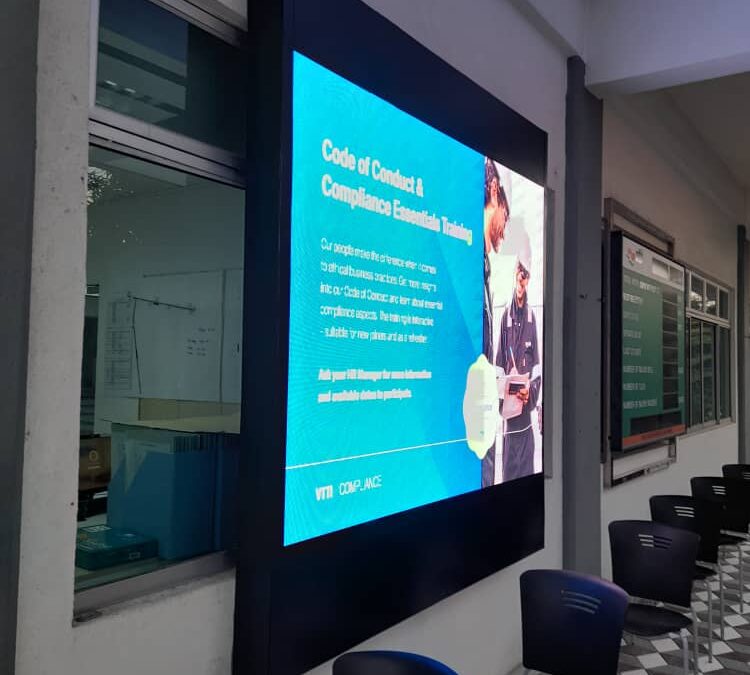
INDOOR LED DISPLAY @ SME CORP. MALAYSIA

INDOOR LED DISPLAY @ SME CORP. MALAYSIA

INDOOR LED DISPLAY @ SME CORP. MALAYSIA

HOME / PROJECT / INDOOR LED DISPLAY @ SME CORP. MALAYSIA


INDOOR LED DISPLAY @ SME CORP. MALAYSIA

  • Date: September 2020
  • Categories: LED Indoor Displays
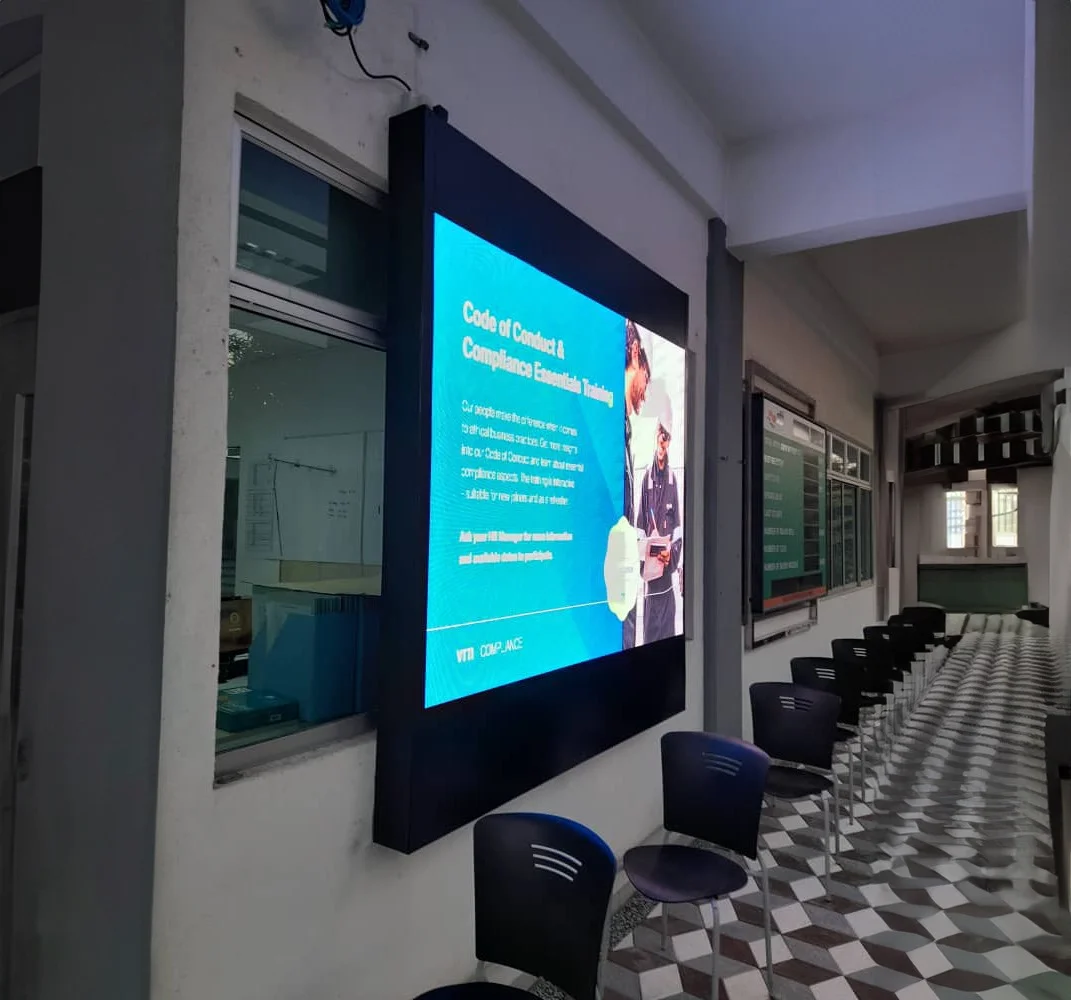
  • Dimension : 1.44m (H) x 2.88m (W)
  • Pixel pitch : P1.3 SMD LED
  • Usage : Indoor

Congratulations on the triumphant Indoor LED Display Installation by Led Vision, showcasing a seamless blend of innovation and aesthetics. The cutting-edge LED Display, with an impressive 2.2 million pixels, achieves not only high-definition video playback but also radiates exclusivity and elegance.

This success sets a new benchmark for indoor LED displays, emphasizing a dedication to pushing technological boundaries. It marks Led Vision as a trailblazer in adopting state-of-the-art solutions, highlighting the transformative power of cutting-edge technology in elevating visual experiences. This milestone reinforces a commitment to excellence and positions Led Vision as a leader in the ever-evolving landscape of display technology. Kudos on this remarkable achievement!


INSTALLATION VIDEO

SME Corporation Malaysia (SME Corporation)

  • Access Street View By Dragging the To The Red Pin On The Google Map.

Contact Us Today – Speak With A Consultant

SCHOLARSHIP DISCUSSION AND PRESENTATION CEREMONY – UTEM

SCHOLARSHIP DISCUSSION AND PRESENTATION CEREMONY – UTEM

SCHOLARSHIP DISCUSSION AND PRESENTATION CEREMONY – UTEM

HOME / EVENTS / SCHOLARSHIP DISCUSSION AND PRESENTATION CEREMONY – UTEM

SCHOLARSHIP DISCUSSION AND PRESENTATION CEREMONY - UTEM

Date:  August 2020
Venue: UTEM Malacca

LED Vision Sdn. Bhd. recently organized a Scholarship Discussion and Presentation Ceremony at Universiti Teknikal Malaysia Melaka (UTeM) to honor two outstanding students, Muhamad Faiz Bin Rozalley and Lee Wei Xiang, both from the Faculty of Electrical Engineering and Electronic (FKEKK).

The event, held in the main meeting room, was graced by the esteemed presence of Datuk Wira, Vice Chancellor of Industry & Community Network at UTeM. The ceremony not only celebrated the academic achievements of the recipients but also underscored the commitment of LED Vision Sdn. Bhd. towards supporting education and fostering collaboration with the academic community. It served as a testament to the pivotal role played by industry leaders in nurturing and recognizing the potential of students in their pursuit of excellence.


*Due to CMCO period in effort to minimize the spread of COVID-19 disease, we strictly follow national SOP and guidelines during their visit.

Contact Us Today – Speak With A Consultant

LED STREET LIGHT @ JABATAN PENGALIRAN, SG PETANI, KEDAH

LED STREET LIGHT @ JABATAN PENGALIRAN, SG PETANI, KEDAH

LED STREET LIGHT @ JABATAN PENGALIRAN, SG PETANI KEDAH

HOME / PROJECT / LED STREET LIGHT @ JABATAN PENGALIRAN, SG PETANI KEDAH

LED STREET LIGHT @ JABATAN PENGALIRAN, SG PETANI KEDAH

  • Date: July 2020
  • Categories: Outdoor LED Luminaire
  • Product: LED Street Light G5 – 80W

Majlis Perbandaran Kedah has reached out to propose the implementation of our cutting-edge LED Street Light technology for their primary roadways. Specifically, the LED Street Light G5 model has been meticulously chosen for this significant project. This selection aligns with our commitment to providing sustainable and energy-efficient solutions to enhance urban lighting infrastructure.

The G5 model boasts advanced features, ensuring that the night environment becomes noticeably clearer and overall water visibility is significantly improved. This initiative underscores our dedication to not only meet but exceed the standards set by local municipalities, contributing to safer and more environmentally friendly urban spaces. We are honored to collaborate with Majlis Perbandaran Kedah in illuminating their main roads with our state-of-the-art LED Street Lights, marking a significant stride toward modern, efficient, and environmentally conscious urban lighting solutions.

Kompleks Pentadbiran

  • Access Street View By Dragging the To The Red Pin On The Google Map.

Contact Us Today – Speak With A Consultant

LED HI FLUX TRAFFIC LIGHT (REDMAN/ GREENMAN)

LED HI FLUX TRAFFIC LIGHT (REDMAN/ GREENMAN)

PRODUCTS / LED TRAFFIC LIGHTS / LED HI FLUX TRAFFIC LIGHT (RED-MAN / GREEN-MAN)

LED HI-FLUX TRAFFIC LIGHT (RED-MAN/ GREEN-MAN)

LED HI-FLUX TRAFFIC LIGHT (RED-MAN/GREEN-MAN)

The importance of traffic lights cannot be overstated when it comes to maintaining order and ensuring the safety of motorists and pedestrians alike. As technology advances, so does the need for more efficient and reliable traffic light solutions. This is where our LED Hi-Flux Traffic Light steps in, revolutionizing the way we perceive traffic management.

With our LED Hi-Flux Traffic Light, we have prioritized three crucial factors: high visibility, waterproofing, and ease of assembly. These features make it an ideal choice for any location, whether it be a busy urban intersection or a remote rural area. Let’s delve deeper into what sets our LED Hi-Flux Traffic Light apart from the rest.

Features:

  • Waterproofing, without screws, Silicon rubber is fixed to casing door for water proofing
  • Perfect precise measurement of casing dimension
  • Easy to assemble. Fit body-to-body stacking assembly

PRODUCT SPECIFICATION


Diameter 300mm

Luminous Intensity acc.

to EN12368

Red        >   400cd

Green    >   400cd

Optical performance acc. to EN12368 B3/1, Type W
Color acc. to EN12368

Red        >   616-624nm

Green    >   499-507nm

LED Type High Power
Design Red Man / Green Man
Material UV-Stabilized Polycarbonate
IP Rating IP65
Total Harmonic Distortion (THD) > 0.90
Weight < 1.5 KG


What is traffic light and its function

Traffic lights, also known as traffic signals, traffic lamps, traffic semaphore, signal lights, stop lights, robots (in South Africa), and traffic control signals (in technical parlance) are important signaling devices that normally located on road intersections, T-junction, pedestrian crossings, and other locations so that it can be used to control the flows of traffic and reduce the occur of road accident. Beside that, traffic light also act as a safety device that appear on the road in vast majority of country in the world. Traffic lights are very important on the traffic safety management to maintain safety on road for all the pedestrians and drivers across the road. Increasing accidents and fatalities occur on the road have cause the growth of the traffic lights market, as traffic lights provide drivers control on road and improve the flow of traffic. Another factor that has driven the growth of the market is the improvement in traffic flow regulations by the respective traffic safety organizations by constantly upgrading and maintaining them and creating various pedestrian facilities, extra-street lighting, traffic signal modifications, and signage marking improvements. The operation of traffic lights requires sophisticated control and coordination to ensure that traffic flow is as smoothly and safely as possible and ensure that the safety of pedestrians and protected them when they drive or walk cross the roads.

Traffic light color meaning

There are 3 most frequently color that we can see on the traffic light in vast majority of country. The 3 color are red, green and orange. Red color in the traffic light is to alert the driver to stop their car. Orange color in the traffic light is to alert the driver to proceed with caution. Green color is to tell driver to go.

Hi-Flux TRAFFIC LIGHTS

Hi-Flux Traffic lights, also known as traffic signals, traffic lamps, traffic semaphore, signal lights, stop lights, robots (in South Africa and most of Africa), and traffic control signals (in technical parlance), are signalling devices positioned at road intersections, pedestrian crossings, and other locations to control flows of traffic.

The world’s first traffic light was short lived. It was a manually operated gas-lit signal installed in London in December 1868. It exploded less than a month after it was implemented, injuring its policeman operator. Traffic control started to seem necessary in the late 1890s and Earnest Sirrine from Chicago patented the first automated traffic control system in 1910. It used the words “STOP” and “PROCEED”, although neither word lit up.

Traffic lights alternate the right of way accorded to users by displaying lights of a standard colour (red, amber (yellow), and green) following a universal colour code. In the typical sequence of colour phases:

  • The green light allows traffic to proceed in the direction denoted, if it is safe to do so and there is room on the other side of the intersection.
  • The amber (yellow) light warns that the signal is about to change to red. In a number of countries – among them the United Kingdom – a phase during which red and yellow are displayed together indicates that the signal is about to change to green. Actions required by drivers on a yellow light vary, with some jurisdictions requiring drivers to stop if it is safe to do so, and others allowing drivers to go through the intersection if safe to do so.
  • A flashing amber indication is a warning signal. In the United Kingdom, a flashing amber light is used only at pelican crossings, in place of the combined red–amber signal, and indicates that drivers may pass if no pedestrians are on the crossing.
  • The red signal prohibits any traffic from proceeding.
  • A flashing red indication is treated as a stop sign.

In some countries traffic signals will go into a flashing mode if the conflict monitor detects a problem, such as a fault that tries to display green lights to conflicting traffic. The signal may display flashing yellow to the main road and flashing red to the side road, or flashing red in all directions. Flashing operation can also be used during times of day when traffic is light, such as late at night in Malaysia.

New trend traffic light

Engineers is already developed the new trend traffic light to reduce the average power consumption of a traffic light, which is the average power consumption 3-colour traffic light to just one to two watts. For the conventional traffic light which is based on the incandescent bulbs, its average power consumption is around 60 watt. The new trend traffic light, with the use of highly efficient LED and digital modules, is expected to benefit city budgets as well as the environment due to its low power consumption. The new 1-watt-technology is branded as ‘Sitraffic One’ is already  introduced to the traffic system and netwok in some places, such as in Bozen, Italy and in Bietigheim-Bissingen, Germany. If replace the conventional traffic light that use incandescent bulbs to the new 1-watt technology, after as little as five years, a converted intersection begins paying for itself. Even updating conventional 230-volt LED technology pays off: at an average intersection with about 55 signal lights, the new 1-watt signals can save about 1,600 kilowatt-hours per year and reduce carbon emissions by about 960 kilograms. We can seen that the conventional traffic light that use incandescent bulbs behind colored diffusion disks are still in operation in many traffic lights around the world. By converting these to the new 1-watt technology, it can reduce power consumption on that traffic light by up to 98 percent. So, all the cities are persuade for replacing the incandescent bulbs traffic light with the new 1watt-technology traffic light.

LED HI FLUX TRAFFIC LIGHT (ARROW)

LED HI FLUX TRAFFIC LIGHT (ARROW)

PRODUCTS / LED TRAFFIC LIGHTS / LED HI FLUX TRAFFIC LIGHT (ARROW)

LED HI-FLUX TRAFFIC LIGHT (RED-MAN/ GREEN-MAN)

LED HI-FLUX TRAFFIC LIGHT (ARROW)


LED Hi Flux Traffic Light Arrow is a cutting-edge solution designed to enhance road safety and efficiently manage traffic flow. With its high flux LED technology, this traffic signal arrow provides optimum visibility even in harsh weather conditions.

The intelligent features of this product set it apart from traditional traffic light arrows. Its advanced algorithms enable intelligent traffic management, ensuring a smooth and organized flow of vehicles. The arrow’s brightness adjusts automatically based on the ambient lighting conditions, providing optimal visibility at all times.

Features:

  • Waterproofing, without screws, Silicon rubber is fixed to casing door for water proofing
  • Perfect precise measurement of casing dimension
  • Easy to assemble. Fit body-to-body stacking assembly

PRODUCT SPECIFICATION


Diameter 300mm

Luminous Intensity acc.

to EN12368

Red        >   400cd

Amber   >   400cd

Green    >   400cd

Optical performance acc. to EN12368 B3/1, Type W
Color acc. to EN12368

Red        >   616-624nm

Amber   >   586-592nm

Green    >   499-507nm

LED Type High Power
Design Arrow
Material UV-Stabilized Polycarbonate
IP Rating IP65
Total Harmonic Distortion (THD) > 0.90
Weight < 1.5 KG

What is traffic light and its function

Traffic lights, also known as traffic signals, traffic lamps, traffic semaphore, signal lights, stop lights, robots (in South Africa), and traffic control signals (in technical parlance) are important signaling devices that normally located on road intersections, T-junction, pedestrian crossings, and other locations so that it can be used to control the flows of traffic and reduce the occur of road accident. Beside that, traffic light also act as a safety device that appear on the road in vast majority of country in the world. Traffic lights are very important on the traffic safety management to maintain safety on road for all the pedestrians and drivers across the road. Increasing accidents and fatalities occur on the road have cause the growth of the traffic lights market, as traffic lights provide drivers control on road and improve the flow of traffic. Another factor that has driven the growth of the market is the improvement in traffic flow regulations by the respective traffic safety organizations by constantly upgrading and maintaining them and creating various pedestrian facilities, extra-street lighting, traffic signal modifications, and signage marking improvements. The operation of traffic lights requires sophisticated control and coordination to ensure that traffic flow is as smoothly and safely as possible and ensure that the safety of pedestrians and protected them when they drive or walk cross the roads.

Traffic light color meaning

There are 3 most frequently color that we can see on the traffic light in vast majority of country. The 3 color are red, green and orange. Red color in the traffic light is to alert the driver to stop their car. Orange color in the traffic light is to alert the driver to proceed with caution. Green color is to tell driver to go.

Hi-Flux TRAFFIC LIGHTS

Hi-Flux Traffic lights, also known as traffic signals, traffic lamps, traffic semaphore, signal lights, stop lights, robots (in South Africa and most of Africa), and traffic control signals (in technical parlance), are signalling devices positioned at road intersections, pedestrian crossings, and other locations to control flows of traffic.

The world’s first traffic light was short lived. It was a manually operated gas-lit signal installed in London in December 1868. It exploded less than a month after it was implemented, injuring its policeman operator. Traffic control started to seem necessary in the late 1890s and Earnest Sirrine from Chicago patented the first automated traffic control system in 1910. It used the words “STOP” and “PROCEED”, although neither word lit up.

Traffic lights alternate the right of way accorded to users by displaying lights of a standard colour (red, amber (yellow), and green) following a universal colour code. In the typical sequence of colour phases:

  • The green light allows traffic to proceed in the direction denoted, if it is safe to do so and there is room on the other side of the intersection.
  • The amber (yellow) light warns that the signal is about to change to red. In a number of countries – among them the United Kingdom – a phase during which red and yellow are displayed together indicates that the signal is about to change to green. Actions required by drivers on a yellow light vary, with some jurisdictions requiring drivers to stop if it is safe to do so, and others allowing drivers to go through the intersection if safe to do so.
  • A flashing amber indication is a warning signal. In the United Kingdom, a flashing amber light is used only at pelican crossings, in place of the combined red–amber signal, and indicates that drivers may pass if no pedestrians are on the crossing.
  • The red signal prohibits any traffic from proceeding.
  • A flashing red indication is treated as a stop sign.

In some countries traffic signals will go into a flashing mode if the conflict monitor detects a problem, such as a fault that tries to display green lights to conflicting traffic. The signal may display flashing yellow to the main road and flashing red to the side road, or flashing red in all directions. Flashing operation can also be used during times of day when traffic is light, such as late at night in Malaysia.

New trend traffic light

Engineers is already developed the new trend traffic light to reduce the average power consumption of a traffic light, which is the average power consumption 3-colour traffic light to just one to two watts. For the conventional traffic light which is based on the incandescent bulbs, its average power consumption is around 60 watt. The new trend traffic light, with the use of highly efficient LED and digital modules, is expected to benefit city budgets as well as the environment due to its low power consumption. The new 1-watt-technology is branded as ‘Sitraffic One’ is already  introduced to the traffic system and netwok in some places, such as in Bozen, Italy and in Bietigheim-Bissingen, Germany. If replace the conventional traffic light that use incandescent bulbs to the new 1-watt technology, after as little as five years, a converted intersection begins paying for itself. Even updating conventional 230-volt LED technology pays off: at an average intersection with about 55 signal lights, the new 1-watt signals can save about 1,600 kilowatt-hours per year and reduce carbon emissions by about 960 kilograms. We can seen that the conventional traffic light that use incandescent bulbs behind colored diffusion disks are still in operation in many traffic lights around the world. By converting these to the new 1-watt technology, it can reduce power consumption on that traffic light by up to 98 percent. So, all the cities are persuade for replacing the incandescent bulbs traffic light with the new 1watt-technology traffic light.